|
Championship Feature |
|
Rules and Regulations: Reminder Superbike, SuperProduction and Superstock - What are the differences? Three classes of motorcycle are eligible to compete in the FIM World Endurance Championship; SuperBike, SuperProduction and Superstock. All three classes compete for the same, single, World Endurance Championship, and all are based around production motorcycles that are available to the public; bikes that you or I could buy from our local bike shops. The Superstock (formerly Stocksport) class allows very limited modifications to the chassis and engine; the modifications that are allowed are aimed at safety rather than performance. Bikes racing in Superstock are as close to production machines as you will see in international competition. For World Endurance racing, the lack of quick change wheel and brake components can be a real hindrance. The Superbike class is for machines with heavily modified frames and highly tuned engines, similar to those raced in World Superbikes. Although based on production machines, they offer the ultimate in power and handling. Tuning for Superbike class World Endurance bikes is typically slight less extreme than for pure world superbike machines but power levels are still substantially increased over standard. 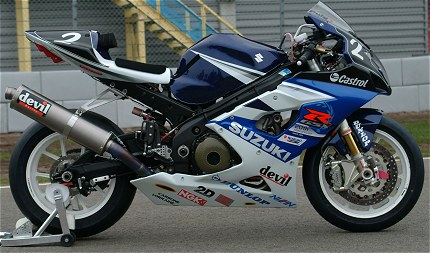
The SuperProduction class is a half-way house between Superbike and Superstock. Engines must remain basically standard, but frames and suspension can be modified. For World Endurance racing this is an excellent compromise; a reliable engine housed in a chassis which allows rapid wheel changes. It's worth pointing out that a standard 1000cc road bike will probably be producing around 150bhp and will already be close to the weight limits for Superstock; the modifications made by endurance teams are generally aimed at improving performance during pit stops and at allowing the bike to better survive crashes. There's a full list of bikes homologated for competition by the FIM here (99kb pdf file). Bikes that haven't been homologated can still compete in the Open or Prototype class, but do not earn championship points. The following is an abridged summary of the class rules; for the full FIM guide click here (730kb pdf file). 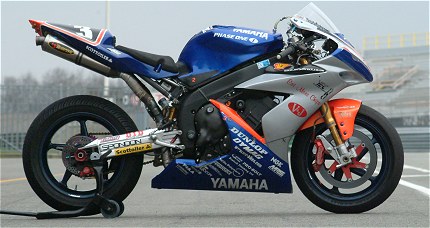
Superbike Machines must be homologated by the FIM. Must retain the same front, rear and side profiles as the homologated bike, with the exception of the exhaust. Engine Twins between 800 and 1000cc, three and four cylinder bikes between 750 and 1000cc. Engines with a bore/stroke ratio of 1.5:1 or greater will be limited to a maximum of 14000 rpm. Twins and triples up to 900cc can use any primary gear ratio. Triples and fours must use the homologated primary ratio. Other gearing can be changed. Slipper clutches are allowed, but triples and fours over 900cc cannot change from wet to dry type clutches. Fuelling Twins and triples up to 900cc must use the original homologated carburettors or injector bodies, or homologated race-kit (described by the FIM as "optional") equipment. 1000cc three and four cylinder bikes must use the original homologated carburettors or injector bodies. The injectors or carb jets can be modified, fuel mapping can be changed and secondary throttle valves can be removed or fixed in the open position. The airbox can be changed or altered. Cooling Radiators and oil coolers can be altered or replaced. Additional radiators and oil coolers can be added. Frame, Suspension and Bodywork The main frame can be strengthened, but nothing can be removed. The subframe can be changed or altered, but must use the same material as the original. Forks can be changed but must be of the original style (USD, etc). The rear fork or swinging arm can be altered or replaced, the rear suspension unit should be the same style (single shock, twin shock, etc) as homologated but linkages can be changed. Wheels and brakes can be altered. Fairings should "conform in principal" to the homologated shape. They can be drilled or cut to incorporate stands or to allow better cooling. Fuel tanks can be altered or replaced. The maximum fuel tank capacity is 24 litres. Weight Minimum weight 170kgs. Minimum tested weight after the race must be within 1% of this, ie; 168.3kg. 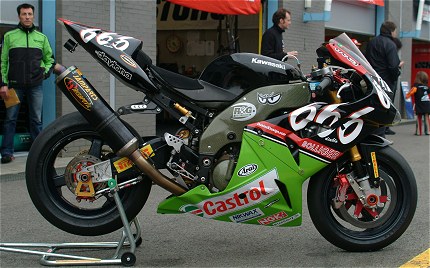
SuperProduction Machines must be homologated by the FIM. Must retain the same front, rear and side profiles as the homologated bike, with the exception of the exhaust. Engine 4 cylinder engines between 600 and 1000cc, 3 cylinder engines between 750 and 1000cc, 2 cylinder engines between 850 and 1200cc. Four stroke engines only. Bore and stroke cannot be changed to bring engines up to the class limits. The air box must remain as originally produced. No modifications are allowed to carburettor or fuel injector bodies. Carb jets and fuel injection mapping can be changed. Cylinder head, valves, and cams must be as homologated. Cylinder head gaskets can be changed. Pistons, con-rods, crank, crankcases, etc. must remain standard. Internal gearing cannot be changed. Weight The minimum weight of a SuperProduction bike is basically defined as the dry weight of the original homologate road bike minus 11kg. Frame, Suspension and Bodywork As for Superbike class. Wiring Harness The original wiring loom must be used. Unused wiring loom elements (supplying current to indicators, horn, etc.) may be unplugged and/or removed, but no cutting is allowed. 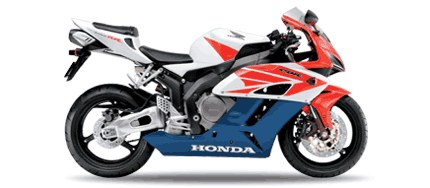
Superstock Machines must be homologated by the FIM. "As the name Superstock implies, the machines used are allowed limited modifications. Most modifications are only allowed for safety reasons." Engine Same capacity limits as SuperProduction, and same tuning restrictions. Weight Same as SuperProduction. Frame, Suspension and Bodywork The frame must remain as originally produced for the homologated model. Nothing can be added by welding or removed by machining. The rear subframe cannot be modified, but bolt-ons can be removed. Forks must be as homologated, but can be re-sprung and re-valved. The rear swinging arm / fork must remain as homolgated. Stand brackets can be added. Rear shock absorber(s) can be replaced. Wheels and brakes must be as homologated, and there are limits on the modifications that can be made to the wheel and calliper mountings. Fuel tanks must be as homologated, but can be fitted with quick fill valves.  All endurance classes allow modification to the exhaust system...
Final Warning! Please don't take this list as gospel; the FIM rule book is the bible on this matter... |
|
… FGSport / Redleg Interactive Media You may download pages from this site for your private use. No other reproduction, re-publication, re-transmission or other re-distribution of any part of this site in any medium is permitted except with the written consent of the copyright owner or in accordance with the provisions of the Copyright, Designs and Patents Act 1988. |